
Summary
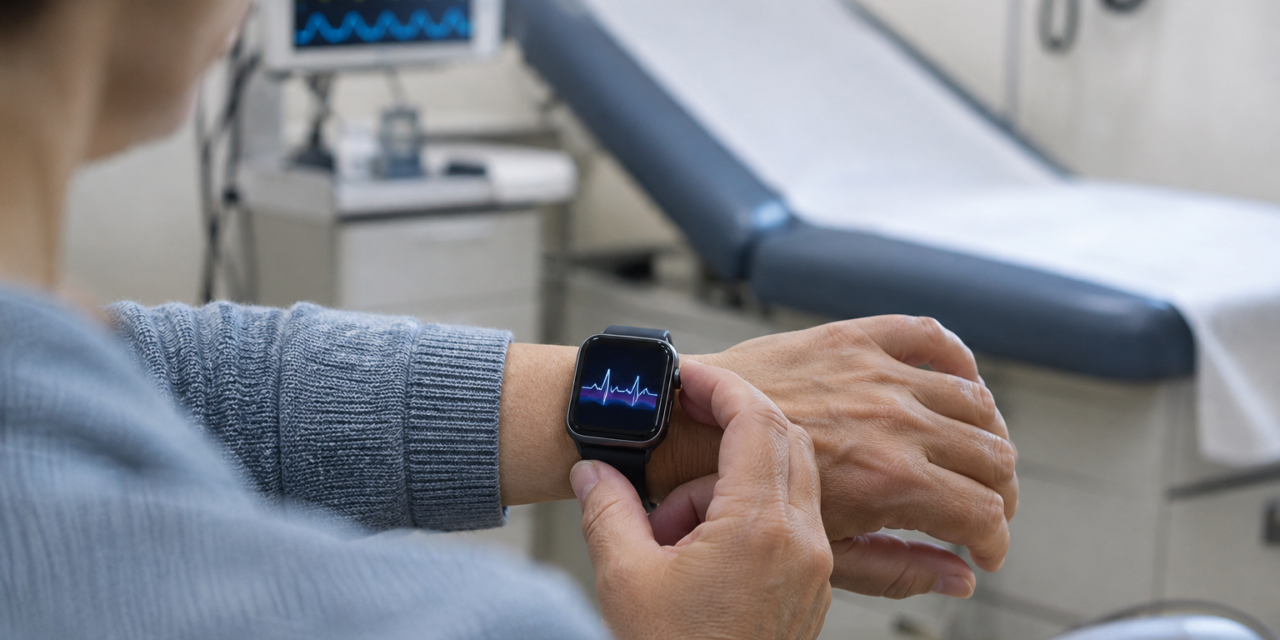
In a preliminary South Korean study, artificial intelligence (AI) analysis of smartwatch electrocardiograms (ECGs) distinguished adults with reduced heart pumping function from those without it, but did not always classify the same person the same way across two watch brands, the American Heart Association said. The findings suggest that smartwatch ECGs may help identify people who need an echocardiogram.
Key Takeaways
- At the same AI score cutoff, the Apple Watch and Samsung Galaxy Watch yielded opposite classifications for 200 of 2,211 adults (9%) tested on both devices.
- Requiring positive results on at least 2 of 3 consecutive recording days cut false positives from 18 to 9 but missed 2 additional cases.
- Across all 146 home-recording participants, echocardiography confirmed left ventricular systolic dysfunction (LVSD) in 81% with consistently positive results and about 6% with consistently negative results.
Medical AI Co., Ltd., developed an AI model that distinguished adults with and without reduced heart pumping function about equally well on two smartwatch brands, although some participants received a positive result on one device and a negative result on the other, according to the American Heart Association’s release. Investigators presented the preliminary findings on Nov 9, 2026, at Scientific Sessions 2026 in Chicago.
Investigators defined LVSD as a left ventricular ejection fraction of 40% or less. They evaluated smartwatch ECGs as a way to identify people who may need further screening, not as a replacement for traditional screening exams.
At an outpatient cardiology clinic, staff supervised back-to-back Apple Watch and Samsung Galaxy Watch recordings for 2,211 adults scheduled for an echocardiogram. When investigators applied the same score cutoff to both watches, using a threshold set in advance with separate Galaxy Watch data, classifications differed for 200 participants (9%).
Of 146 adults who recorded smartwatch ECGs at home, 108 recorded on at least 5 days in the first week. Among 70 participants without LVSD, requiring a positive result on at least 2 of 3 consecutive recording days reduced false positives from 18 to 9 compared with counting any single positive day. The repeat-testing rule, one of several the investigators examined, identified 31 of 38 participants with LVSD, compared with 33 under the single-positive-day rule.
Among all 146 adults who recorded at home, echocardiography confirmed LVSD in 81% of those with consistently positive results and about 6% of those with consistently negative results. Another 49% had a mix of positive and negative results, and 40% of that group had confirmed LVSD.
Many participants referred for echocardiography already had known heart failure, and LVSD was more common in the study population than in the general population, so investigators adjusted the analysis to estimate results at lower prevalence.
“Larger studies are needed to determine how best to use these results to guide further evaluation,” says Hak Seung Lee, MD, a study author, chief medical officer of Medical AI Co., Ltd., and a cardiologist at the Digital Healthcare Institute, Sejong Medical Research Institute in Incheon, South Korea, in the association’s release.
Incheon Sejong Hospital enrolled the clinic group between July 2023 and May 2024 and the home-recording group between July 2024 and December 2025. At home, 94% of participants used a Galaxy Watch, and participants recorded a median of 2.4 ECGs per day.
Both groups recorded 30-second, single-lead ECGs within 14 days before or after transthoracic echocardiography, which investigators used to confirm LVSD.
The American Heart Association noted that the single-hospital sample of patients referred for echocardiography may not reflect the general population and that the repeat-testing findings were exploratory. Investigators excluded poor-quality recordings, which accounted for less than 3% of recordings, and staff reminded participants to keep recording at home.
Investigators did not determine whether using the AI results led to earlier treatment, fewer hospitalizations, or improved survival. They did not have 12-lead ECGs for comparison in the clinic group. The American Heart Association said the conference abstract was not peer-reviewed and the findings remain preliminary until publication as a full manuscript in a peer-reviewed journal.


