
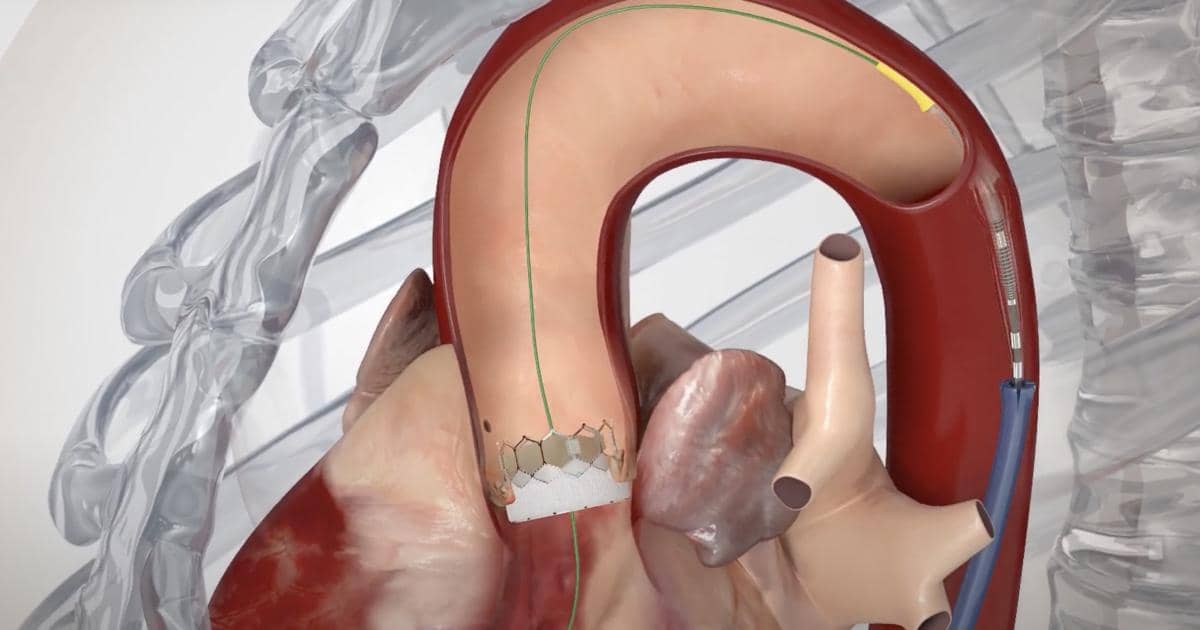
The Landscape of Transcatheter Aortic Valve Replacement
Transcatheter aortic valve replacement (TAVR) has revolutionized the treatment of patients with symptomatic severe aortic stenosis (AS). This minimally invasive procedure offers a viable alternative to surgical aortic valve replacement (SAVR), providing new hope for patients across all surgical risk profiles. TAVR involves the implantation of a transcatheter heart valve, with various valve platforms available, including balloon-expandable valves (BEV) and self-expanding valves (SEV). As the field of TAVR continues to advance, it is crucial to evaluate and compare the different valve platforms to optimize patient outcomes.
Unveiling the Findings: Comparative Analysis of BEV and SEV in High-Risk Patients
In a comprehensive analysis of six studies involving 2,935 patients, researchers aimed to compare the safety and efficacy of BEV and SEV in high-risk patients undergoing TAVR. The primary outcome examined was all-cause mortality at 30 days. The findings revealed significant differences between the two valve platforms.
BEV demonstrated a lower risk of all-cause mortality (2.2% vs. 4.5%) and cardiovascular mortality (2.5% vs. 4.3%) compared to SEV at the 30-day mark. These findings provide compelling evidence suggesting that BEV may offer superior outcomes in terms of reducing mortality rates for high-risk patients undergoing TAVR.
Beyond Mortality Rates: Key Differentiators and Implications
The analysis also examined additional outcomes defined by the Valve Academic Research Consortium 2 (VARC-2) criteria. The results indicated that BEV had a lower incidence of certain complications compared to SEV. These included a lower rate of implantation of more than one valve per procedure (0.78% vs. 5.11%) and a lower incidence of moderate/severe aortic regurgitation/paravalvular leak (2.5% vs. 9.01%). These findings suggest that BEV may offer improved procedural outcomes and a reduced risk of complications compared to SEV.
The implications of these findings are significant for clinical practice. Healthcare professionals involved in TAVR procedures should consider the potential benefits of using BEV, particularly for high-risk patients. These findings may influence decision-making regarding valve selection and contribute to improved patient outcomes.
The Need for Long-Term Data and Lower-Risk Patients
While the study’s findings shed light on the short-term outcomes of BEV and SEV in high-risk patients, there is a critical need for long-term data to fully understand the durability and sustained efficacy of these valve platforms. The analysis primarily focused on outcomes at the 30-day mark, and it remains unclear whether the observed differences persist over a more extended period.
Additionally, the study primarily included high-risk patients, raising questions about the applicability of these findings to lower-risk patient populations. Further research is necessary to evaluate the outcomes of BEV and SEV in a broader range of patients, including those at lower surgical risk.
Implications for ClinicalPractice and Future Research
The findings of this comparative analysis have significant implications for clinical practice and future research in the field of TAVR. The observed superiority of BEV over SEV in terms of reducing mortality rates and certain complications suggests that BEV should be considered as the preferred valve platform for high-risk patients undergoing TAVR. This information can guide healthcare professionals in making informed decisions and potentially improve patient outcomes.
However, it is essential to acknowledge the limitations of the current analysis. Further research is necessary to validate and expand upon these findings. Long-term data are needed to assess the durability, valve function, and patient survival beyond the initial 30-day period. Additionally, studies focusing on lower-risk patient populations will provide valuable insights into the applicability and efficacy of BEV and SEV across a broader range of patients.
As the field of TAVR continues to evolve, it is crucial to gather robust evidence through rigorous research. Comparative studies, randomized controlled trials, and post-hoc analyses can contribute to a deeper understanding of the benefits and limitations of different valve platforms. Such research can inform clinical guidelines, refine procedural techniques, and enhance patient care.
In conclusion, the comparative analysis of BEV and SEV in high-risk patients undergoing TAVR reveals significant differences in outcomes, highlighting the potential superiority of BEV in terms of reducing mortality rates and certain complications. These findings provide valuable insights for healthcare professionals involved in TAVR procedures. However, further research is necessary to confirm and expand upon these findings, focusing on long-term outcomes and lower-risk patient populations. By continually advancing our knowledge in this field, we can strive for continued improvement in the safety and efficacy of TAVR, ultimately benefiting patients worldwide.


