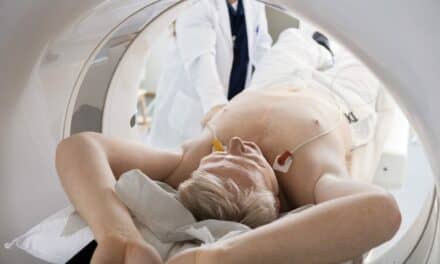
Stress cardiovascular magnetic resonance imaging (CMR) has emerged as a powerful tool in the evaluation of patients with stable chest pain and suspected coronary artery disease (CAD). This noninvasive imaging modality provides highly accurate diagnostic capabilities and effective risk stratification. By assessing stress-inducible ischemia and late gadolinium enhancement (LGE), stress CMR offers valuable insights into the presence and prognosis of CAD, shaping treatment decisions and improving patient outcomes.
A systematic review and meta-analysis encompassing 74,470 patients highlight the remarkable diagnostic accuracy of stress CMR. The technique demonstrates a sensitivity of 84% and specificity of 79% for detecting anatomically obstructive CAD when compared to invasive coronary angiography (ICA). In addition, stress CMR shows favorable performance compared to invasive fractional flow reserve (FFR), with a sensitivity of 81% and specificity of 86% for functionally obstructive CAD. These findings emphasize stress CMR as a reliable method for identifying CAD and guiding appropriate treatment strategies.
The presence of stress-inducible ischemia and LGE detected by CMR bears significant prognostic implications. Patients exhibiting these abnormalities experience increased mortality and a higher likelihood of cardiovascular events. Specifically, inducible ischemia and LGE are associated with a roughly 2-fold higher risk of all-cause mortality and a 6-fold higher risk of cardiovascular mortality. Moreover, the occurrence of major adverse cardiovascular events (MACEs) is approximately 5-fold more likely in patients with ischemia or LGE. Combining both factors further amplifies the risk, while normal stress CMR findings reduce the likelihood of adverse events.
The favorable cost-effectiveness profile of stress CMR, when compared to other diagnostic modalities, presents an opportunity to enhance patient care while achieving significant cost savings. By reducing the need for unnecessary tests and revascularization procedures, stress CMR proves its value in optimizing resource utilization. Additionally, the study highlights the duration of the low-risk period after a normal stress CMR result, providing insights for repeat imaging intervals and aiding in the management of patients with initial normal imaging results or subclinical disease.
Stress CMR, particularly with 3-T MRI, has established itself as a valuable diagnostic and prognostic tool for coronary artery disease assessment. Its high accuracy in detecting CAD and predicting cardiovascular risk positions it as an essential component of comprehensive patient care. By harnessing the power of stress CMR, clinicians can make informed decisions, tailor treatment strategies, and improve outcomes for individuals with suspected or known CAD.