
Summary
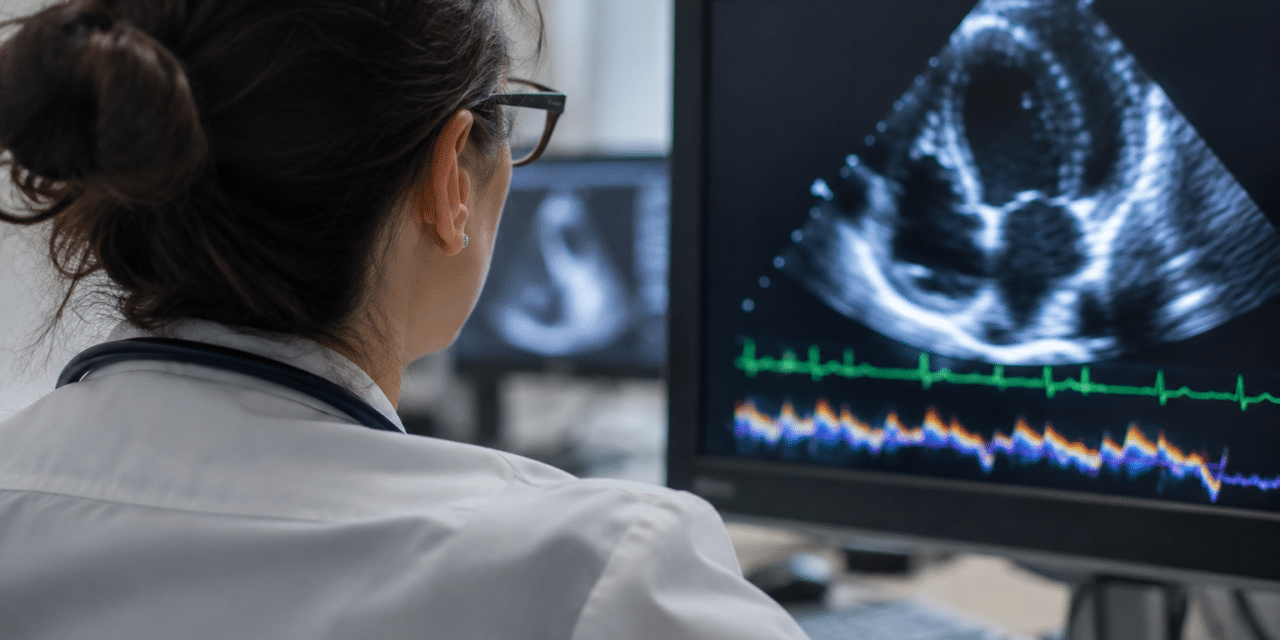
Preliminary reports drafted by artificial intelligence (AI) performed comparably to those written by sonographers and cardiologists in a randomized trial of echocardiogram interpretations, the American Heart Association said. Cardiologists spent less time completing reports when they started with an AI draft, and the trial left the final review and interpretation with a cardiologist.
Key Takeaways
- Cardiologists made substantial changes to 50.6% of AI-generated preliminary interpretations, vs 49.7% of those drafted by sonographers and cardiologists, meeting the trial’s noninferiority criteria.
- Cardiologists averaged 4.6 minutes per echocardiogram with an AI draft and 8.5 minutes without AI assistance, a time savings of about 46%.
- The randomized trial used 1,200 echocardiograms acquired during routine care at hospitals and outpatient clinics within 21 Kaiser Permanente Northern California medical centers.
A substantial-change rate of 50.6% for AI-drafted interpretations of heart ultrasound exams, vs 49.7% for drafts from sonographers and cardiologists, met a randomized trial’s criteria for noninferiority. The preliminary findings were presented Nov 9, 2026, at Scientific Sessions 2026 in Chicago, according to the American Heart Association’s release.
Researchers assessed accuracy by tracking how often cardiologists made substantial changes to preliminary echocardiogram interpretations before signing off. For each of 1,200 exams acquired during routine care, an AI tool, a sonographer, and a cardiologist each drafted a report. Investigators randomly assigned the drafts to reviewing cardiologists, who finalized the reports without knowing who prepared them.
Cardiologists spent an average of 4.6 minutes per exam reviewing and finalizing reports from AI drafts, vs 8.5 minutes preparing reports without AI assistance, a time savings of about 46%. Reports completed with AI assistance were more consistent with historical reports in the medical record than those in the comparison group. Reviewing cardiologists could not tell whether the draft came from the AI tool, a sonographer, or another cardiologist.
Co-senior author Keane K. Lee, MD, a cardiologist at Kaiser Permanente Santa Clara Homestead Medical Center in Santa Clara, California, was surprised by how much time the AI drafts saved. Lee said the time savings across a day’s exams could mean faster results and more access to care for patients, as well as more time for cardiologists to spend with patients.
“The cardiologist remains ultimately responsible for interpreting the echocardiogram and certifying the accuracy of the final report, even when AI assists with the process,” says Lee in a release. Lee added that physicians use their clinical judgment and knowledge of the patient to develop an individualized care plan.
The exams took place over 2 weeks in March 2025 at hospitals and outpatient clinics within 21 Kaiser Permanente Northern California medical centers. Patients were 69 years old on average; 47% were women and 53% were men. About 54% self-identified as White, 16% as Hispanic, about 16% as Asian, 8.8% as Black, and 5.8% as other.
Nine sonographers with an average of 7.2 years of experience and 20 cardiologists with an average of 11.7 years of experience participated. The investigators described the trial as the first randomized test of an AI tool that drafts a full echocardiogram report with both interpretations and measurements.
The findings appeared in late-breaking science abstract 28202, which had not undergone peer review. The American Heart Association considers the findings preliminary until a full manuscript appears in a peer-reviewed journal.
The trial did not test whether AI-assisted echocardiogram interpretations improved patients’ long-term health. The investigators noted that cardiologists knew they were taking part and may have changed their usual work patterns. Further research is needed to assess how AI-assisted interpretation performs in clinical settings at larger scale and with higher exam volumes.


