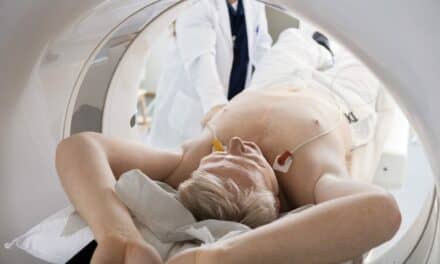
New Jersey, N.J. – In an era where technology is propelling the boundaries of medical diagnostics, 3D medical imaging systems have emerged as revolutionary tools, reshaping the landscape of healthcare. These cutting-edge technologies, incorporating computed tomography (CT), magnetic resonance imaging (MRI), ultrasound, and other advanced techniques, are enabling doctors and healthcare professionals to visualize intricate three-dimensional images of the human body with unparalleled accuracy and precision.
Unprecedented Accuracy for Diagnoses and Treatment Planning
Traditional two-dimensional imaging methods have long been the cornerstone of medical diagnostics. However, the limitations of such approaches have become increasingly apparent in recent years. Enter 3D medical imaging systems, which provide a host of advantages over their predecessors. By capturing highly detailed images of organs, tissues, and bones, these systems offer healthcare professionals more accurate measurements of structures within the body.
This enhanced precision leads to more precise diagnoses, empowering doctors to devise targeted treatment plans with unparalleled accuracy. The ability to visualize the human body in three dimensions allows for a deeper understanding of anatomical intricacies, offering insights that were previously inaccessible. Consequently, patient outcomes are improving as healthcare professionals can tailor treatments to specific needs, maximizing efficacy and minimizing risks.
Expanding Horizons of the Global 3D Medical Imaging System Market
As the demand for advanced medical technologies escalates, the global 3D Medical Imaging System Market is projected to witness a substantial compound annual growth rate (CAGR) of +17% during the forecasting period of 2023 to 2030. Prominent market players such as GE Healthcare, Philips Healthcare, Siemens Healthineers, Fujifilm, Canon Medical, Dentsply Sirona, and EOS Image are leading the charge by continuously innovating and revolutionizing the field.
Pioneering Technological Advancements and Market Trends
The 3D Medical Imaging System Market research report encompasses a comprehensive overview of the industry, tracking recent developments, innovations, and market trends. By providing authentic data and insights, this report equips industry stakeholders with the knowledge required to make informed decisions amidst an evolving landscape.
From business strategies to financial status and upcoming products, the competitive landscape analysis sheds light on the major market players driving the industry forward. These companies are at the forefront of shaping the future of medical diagnostics, setting new standards and pushing the boundaries of what is possible.
An Evolving Regional Landscape
As the 3D medical imaging revolution unfolds, different regions are witnessing varying degrees of growth and adoption. North America, South America, Asia and the Pacific region, the Middle East and Africa, and Europe are the primary focus areas, each contributing to the expansion of the market in unique ways. The region-wise coverage of the market provides valuable insights into the dynamics at play across the globe.
Segmentation Analysis: Unraveling the Possibilities
In order to deliver a precise understanding of the market, segmentation plays a crucial role. The market is segmented based on techniques, including ultrasound, X-ray, MRI, and others, providing a comprehensive view of the diverse imaging modalities available. Furthermore, segmentation based on applications, such as oncology, cardiology, orthopedic, and others, allows for a granular examination of the market landscape, highlighting specific areas where 3D medical imaging systems are revolutionizing diagnostics and treatment.
Towards a Future of Enhanced Healthcare
The future of medical diagnostics and treatment planning is being shaped by the remarkable advancements in 3D medical imaging systems. By combining technological innovation, medical expertise, and a commitment to improving patient outcomes, these systems are revolutionizing the healthcare industry. As healthcare professionals continue to embrace the power of three-dimensional imaging, the possibilities for accurate diagnoses and precise treatment planning are expanding, ushering in an era of enhanced healthcare and better lives for all.