Summary
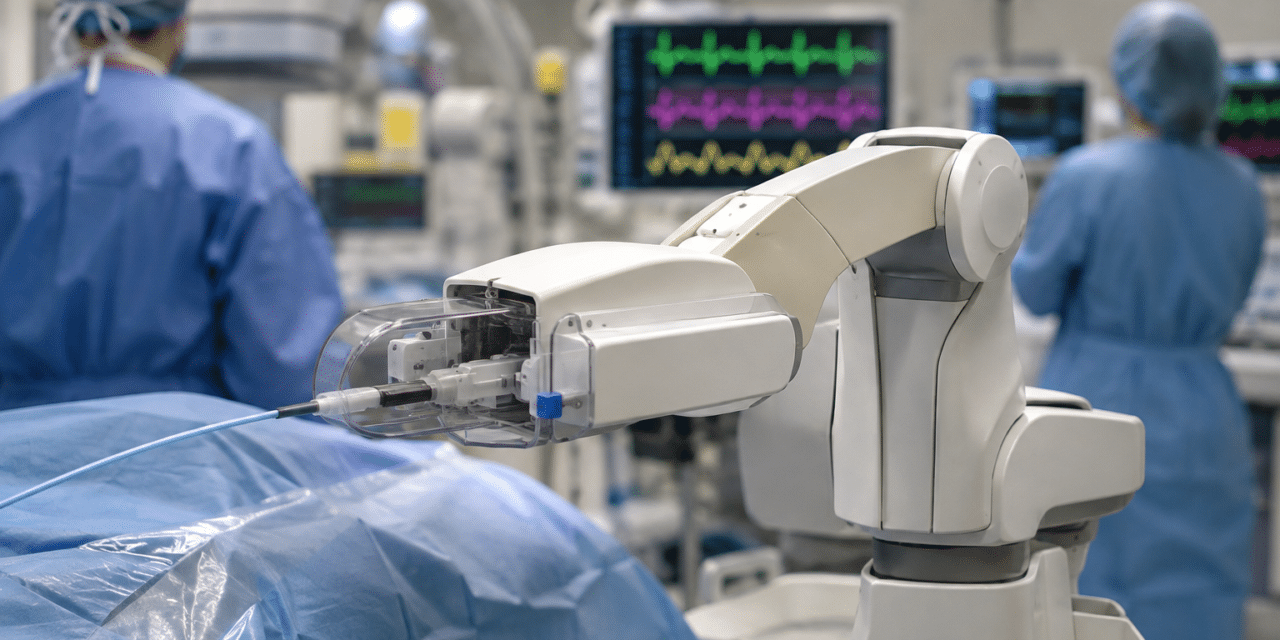
Capstan Medical said its investigational Capstan Compass Robotic System was used to complete the company’s first robot-assisted transcatheter mitral valve replacement (TMVR) in the US. The procedure at The Christ Hospital in Cincinnati, Ohio, was part of an early feasibility study authorized by the US Food and Drug Administration (FDA).
Key Takeaways
- Santiago Garcia, MD, who led the procedure and directs the Structural Heart Program at The Christ Hospital, described the procedure as successful and the patient as stable at discharge.
- Physicians use a handheld controller to move the catheter and to position and deploy the valve instead of operating multiple knobs on a traditional catheter system.
- Capstan Medical’s Compass TMVR system remains investigational and is not approved for commercial use in the United States.
The Christ Hospital Heart & Vascular team performed Capstan Medical’s first US robot-assisted TMVR on Nov 9, 2026, according to a Nov 16, 2026, release from Capstan Medical. The team used the investigational Capstan Compass Robotic System.
The Cincinnati procedure took place under an FDA-authorized early feasibility study. Santiago Garcia, MD, who led the team and directs the Structural Heart Program at The Christ Hospital, says in a release, “I am pleased to report that the procedure was successful, and the patient was discharged home in stable condition.”
Mitral regurgitation occurs when the mitral valve does not close properly, allowing blood to flow backward through the heart. Capstan Medical said many patients face too high a risk for conventional surgery.
Capstan Medical said existing catheter-based treatments are not suitable for all patients. The company designed its system to treat more patients with mitral valve disease and address the difficulty of navigating the heart’s anatomy.
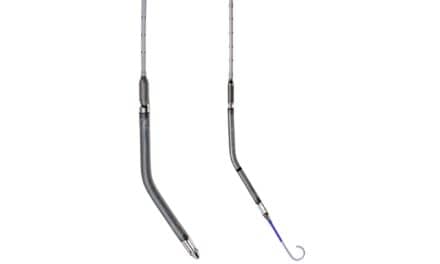
The system pairs a flexible, multi-axis catheter with robotic navigation and a valve implant. Rather than operating multiple knobs on a traditional catheter system, physicians use a handheld controller to move the catheter and to position and deploy the valve during the minimally invasive procedure.
“This first U.S. case builds on our initial clinical experience and brings us another step closer to expanding treatment options to patients who need them most,” says Maggie Nixon, chief executive officer of Capstan Medical, in a release. The company announced its first-in-human robot-assisted mitral valve replacement procedures in Chile in March 2025. Garcia was present for those procedures.
Capstan Medical said its Compass TMVR system is investigational and is not approved for commercial use in the United States.